
July 1990. Salvatore Schillaci was nobody in January and by summer he was Golden Boot winner and best player at the Italy World Cup, the goalscorer who set an entire country dreaming about the national team. Three years later he was no longer playing anywhere that mattered. That arc, from anonymity to peak and from peak to oblivion, is the business we are talking about today. And it explains why in a World Cup year the smart club buys early and the nervous club foots the bill afterwards.
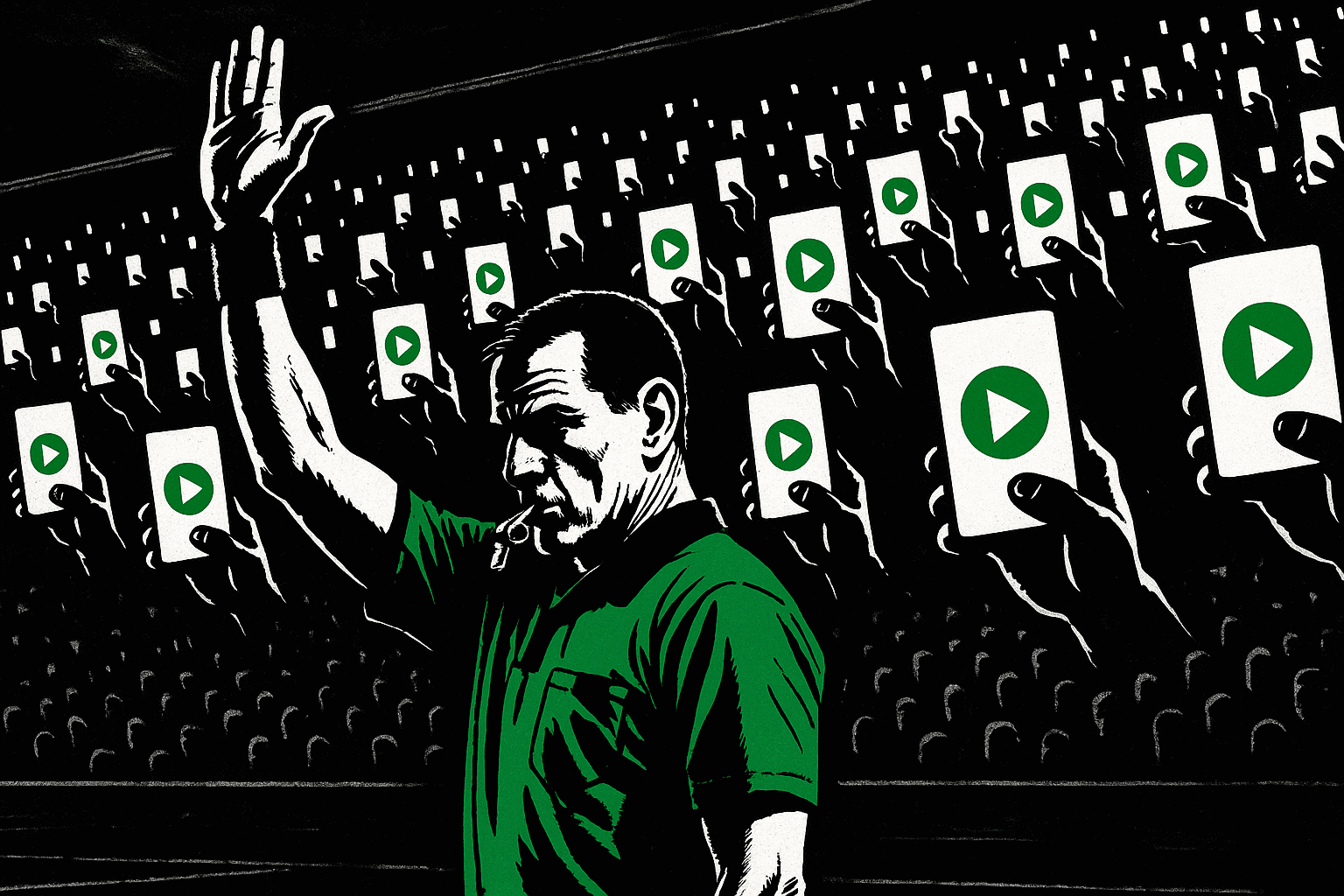
The logic is simple, if uncomfortable for the seller. A good World Cup does not manufacture quality, it manufactures price. The player leaves the tournament as the same person who entered, with the same miles in his legs and the same limitations, but with one new thing attached: five or seven matches that half the planet watched simultaneously. That exposure moves the number, not the level. That is why the one who moves early buys cheap and keeps the appreciation, and the one who waits buys expensive only to discover, if lucky, that they paid a premium for six weeks of television.
That visibility drives price is not pundit intuition. The work of Müller, Simons and Weinmann published in 2017 in the European Journal of Operational Research modelled market value from performance and from popularity and attention variables, and found that media visibility is a determinant of value in its own right. Before that, the foundational study by Herm, Callsen-Bracker and Kreis in 2014 in Sport Management Review had already validated that Transfermarkt's collaborative valuations approximate real transfer fees and respond to both sporting performance and popularity. Translated: a World Cup fires up the two channels that inflate a price tag. One of them, attention, has nothing to do with whether the player is actually better.
The economic mechanism has old and well-oiled names. The superstar economics described by Rosen in 1981 says that minimal differences in talent or visibility translate into brutal differences in price. Signalling theory explains why a World Cup works so well as a shop window: it is a public and credible signal that reaches many buyers simultaneously, it narrows the information asymmetry and pushes the equilibrium price upward. And the winner's curse, drawn from auction theory, finishes the job. When several clubs bid for a player whose real value is uncertain, the winner is whoever is most optimistic. After a tournament, the variance in estimates spikes and the club that walks away with the player tends to overpay for a laughably small sample of matches.
James Rodríguez is the textbook case. He left Brazil 2014 as Golden Boot winner with six goals, a player already known in Europe from his time at Porto and Monaco who suddenly meant everything to the general public, and Real Madrid bought him from Monaco that same summer for a figure in the high tens of millions. Enzo Fernández repeated the choreography at Qatar 2022, best young player of a World Cup that Argentina won, and Chelsea extracted him from Benfica in January 2023 for one of the highest fees in British market memory. Cody Gakpo scored three goals for the Netherlands and signed for Liverpool in that same winter window. Gvardiol shone with Croatia and the following summer Manchester City paid for him one of the highest fees ever recorded for a defender. The pattern does not fail. The tournament switches on the spotlight and the price rises behind it.
This is where Barça's move for Gordon fits. Getting ahead of a World Cup window is exactly the highest expected-value play when the profile is a player with room to explode in the shop window. You lock in the price before the signal elevates it, you absorb the risk that the player does not stand out, and in return you avoid the competitive bidding that follows. If Gordon had had a good tournament and come to market in summer, we would not be talking about the same number. We would be talking about double, or close to it, with half the Premier League behind him and the seller sitting on the asset waiting for the tide to rise.
Because the other side of the table plays the opposite game. The World Cup shifts negotiating power toward the seller almost mechanically. With the public signal in hand, the selling club no longer needs to sell cheap; it has more suitors and can delay the decisive conversation until the reserve price rises on its own. The shop window is a deliberate strategy, not an accident. The intelligent buyer knows this, and that is why their countermove is always the same: close early, even before the qualifying phase if necessary, to avoid paying the inflation that the tournament itself provokes.
It pays not to swallow the whole story. The best-documented link in the literature does not run from the tournament to individual value, but the other way around. Gerhards and Mutz, from the Freie Universität Berlin, showed robustly that the aggregate market value of a national squad predicts its results at World Cups and European Championships. The effect we care about here, the tournament lifting the price tag of a specific player, exists but is more modest, noisier and frequently temporary. A World Cup is five or seven matches. A club season is forty or fifty. Sustained club performance predicts value far better than a summer peak, and the tournament bump tends to revert to the mean if there is no substance behind it. The World Cup is a catalyst for attention and timing, almost never a genuine creator of value.
And then there is the graveyard. El-Hadji Diouf burst onto the scene with Senegal in 2002, Liverpool paid for him and the signing is widely remembered as a textbook failure, buying expensive on a small sample. Schillaci is the historical archetype of the same thing, the man who was Golden Boot winner and best player of a tournament and sustained nothing afterwards. The famous cases, both the hits and the disasters, deceive because they overrepresent the extremes and hide the average player, who neither explodes nor collapses. Nobody writes a feature about the correct midfielder who cost what he was worth. That is why survivorship bias inflates the sense that the World Cup is a machine for creating or destroying stars, when most of the market is still driven by the structural upward trend documented by FIFA in its Global Transfer Report, Deloitte and the CIES. The heavy winter spending after Qatar was also heavily contaminated by Chelsea's extraordinary and particular outlay, not by a clean and evenly distributed World Cup effect.
The honest objection is this. Without a rigorous event study with a control group of summers without a tournament, separating the World Cup premium from general market inflation is nearly impossible, and no single case serves as econometric proof. If a serious study were to show that the post-tournament premium is insignificant or fully reversible, the advantage of moving early would shrink to option value and waiting, with less risk, would once again be competitive.
Meanwhile, the 2026 World Cup with 48 teams expands the shop window to many more nations and many more players, so the list of potentially expensive revelations grows longer. Whoever has the list ready before the opening whistle will buy at today's price. Everyone else will pay the price of television.