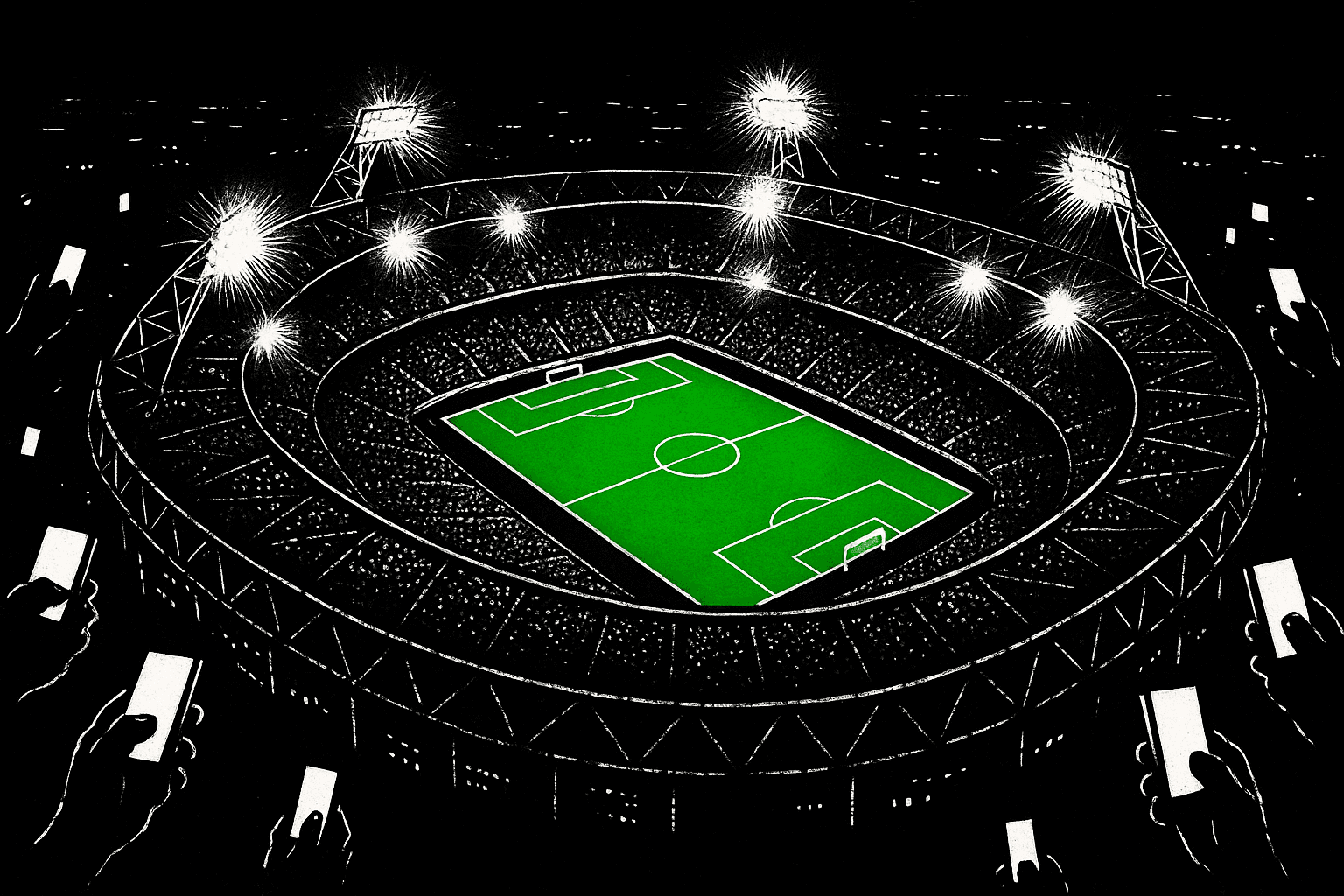

Imagine two identical fans. Same age, same cholesterol, same sweaty shirt. One collapses in the stands of a stadium in Texas, the second in one in Ontario, the third in Mexico City. All three receive, in the first ten minutes, almost exactly the same care. A resuscitation team arrives with a defibrillator and oxygen, the red code is activated, the patient is stabilized and loaded into an ambulance parked right by the emergency exit. Up to that point, twins. What changes, and changes brutally, is what arrives later in the mail. The bill.
That is the uncomfortable thesis of the 2026 World Cup medical setup. FIFA standardizes the emergency and lets the market set the price. The protocol is global, millimetric, almost Soviet in its uniformity. Clinics equipped like an emergency room inside the venue, doctors and nurses spread across the stands and hospitality zones, ambulances on standby and others in reserve, agreements signed with hospitals that have cardiovascular ICUs and catheterization labs waiting with the door open one hour before and two hours after the final whistle. FIFA demands that they save your life equally well in all three countries. What it does not demand, because it is not its job, is that anyone pay for it.
And that is where the abyss opens. The same incident, identical severity, generates a cost that depends on a detail the fan chose months earlier without thinking much about it. Whether they bought insurance. Which one. With what exclusions in the fine print that no one reads.
It is worth understanding why this is not obvious. When one thinks of health inequality one thinks of quality. Of being treated well in one place and so-so in another. But this is not about that. Immediate care is covered by the organizer as part of event security, it is not billed to the spectator, it is as much a part of the match as the grass or the floodlights. The Canadian venues have had to coordinate with their regions' paramedic agencies to reinforce the setups inside the stadiums, with public funds. Other U.S. cities have set up advanced medical posts with stretchers, monitors, portable X-rays and medication, paid for with state and federal money, precisely to avoid overwhelming local hospitals. No one passes that bill to the fan. First aid is pure socialism. The problem begins when the patient crosses the hospital door.
Because that is where the gift ends. The ambulance takes you, yes, but the bill for the transfer and the admission is yours, or your insurer's, or no one's and then you are a debtor. FIFA contracts hugely expensive liability, cancellation and even terrorism policies, shields that protect the event from lawsuits if the stadium were negligent. None of those policies covers a single dollar of the fan's hospitalization. FIFA insures itself. You can go hang.
And here the figures do the dirty work. In the United States, one of the most privatized systems on the planet, a sprained ankle treated in the ER can run from several hundred to several thousand dollars. A minor emergency moves in that same range and a day of hospitalization easily exceeds thousands of dollars. Most foreign private plans do not even work there, so the Spanish or Argentine tourist without adequate coverage swallows the full bill, in dollars, with the most advanced technology in the world charging them for even the air conditioning in the room. The United States saves your life with first-class resources and ruins you with identical efficiency.
Canada offers another model. A provincial public system, paramedics who are civil servants paid with taxes rather than publicly traded companies, ambulances operated by state agencies. For the ordinary Canadian, an emergency costs a fixed fee or nothing at all. The catch is that this free care has a passport. The foreigner is not part of the deal. They are billed in Canadian dollars like any tourist, although the system, at least, does not allow the uberization of ambulances that does exist south of the border. There is an egalitarian standard in the care, not in who pays for it.
Mexico completes the map with a hybrid. The Red Cross and municipal paramedics handle much of the initial care, with a non-profit component that in the Anglo-Saxon model sounds like something from Mars. There are cardioprotection protocols in the three host stadiums, prestigious-named hospitals ready to receive, Medica Sur, the ABC, Angeles del Pedregal in the capital, San Javier and Puerta de Hierro in Guadalajara, TecSalud in Monterrey already thinking about foreign patients. The bill is lower than in the United States, but it is not trivial. A stay in the intensive care unit of a Mexican private hospital can shoot up to very high figures, and many demand a deposit in advance before they touch you. Public care to stabilize, private business to cure.
The honest counterpoint is that this inequality is not invented by the World Cup or FIFA. It is the photograph of three health systems that already existed before anyone kicked a ball. The tournament merely concentrates into four weeks and sixteen venues a structural difference that has been in place for decades. And one can argue that the adult fan knows what they are getting into. The insurance market has spent months offering travel policies designed for major events, with coverage that recommends high limits and repatriation included. The information is there. Whoever travels to Dallas without robust insurance does so forewarned. It is a decision, not an ambush.
True. But there is something perverse in FIFA demanding that each venue prove it has hospitals and ambulances ready, that it impose a medical manual with minimum requirements down to the last defibrillator, and yet keep absolute silence about who pays for the rescue. The organizer guarantees you will not die in the stands. On whether you will leave the hospital in debt, it looks the other way and refers you to an insurer's website. The business revolves around that gap. Private hospitals, for-profit ambulance companies, event medicine firms that outsource on-site care and then charge whoever they can. The spectacle is global, the emergency is global, medical solidarity lasts exactly as long as it takes the ambulance to reach reception.
So next summer, when someone clutches their chest in the 70th minute, pray it happens in the right country. Or better, read the policy before boarding the plane. Health, in this World Cup, also plays away.